
Why Karachi’s Humidity Wrecks Your Skin — and What to Do About It

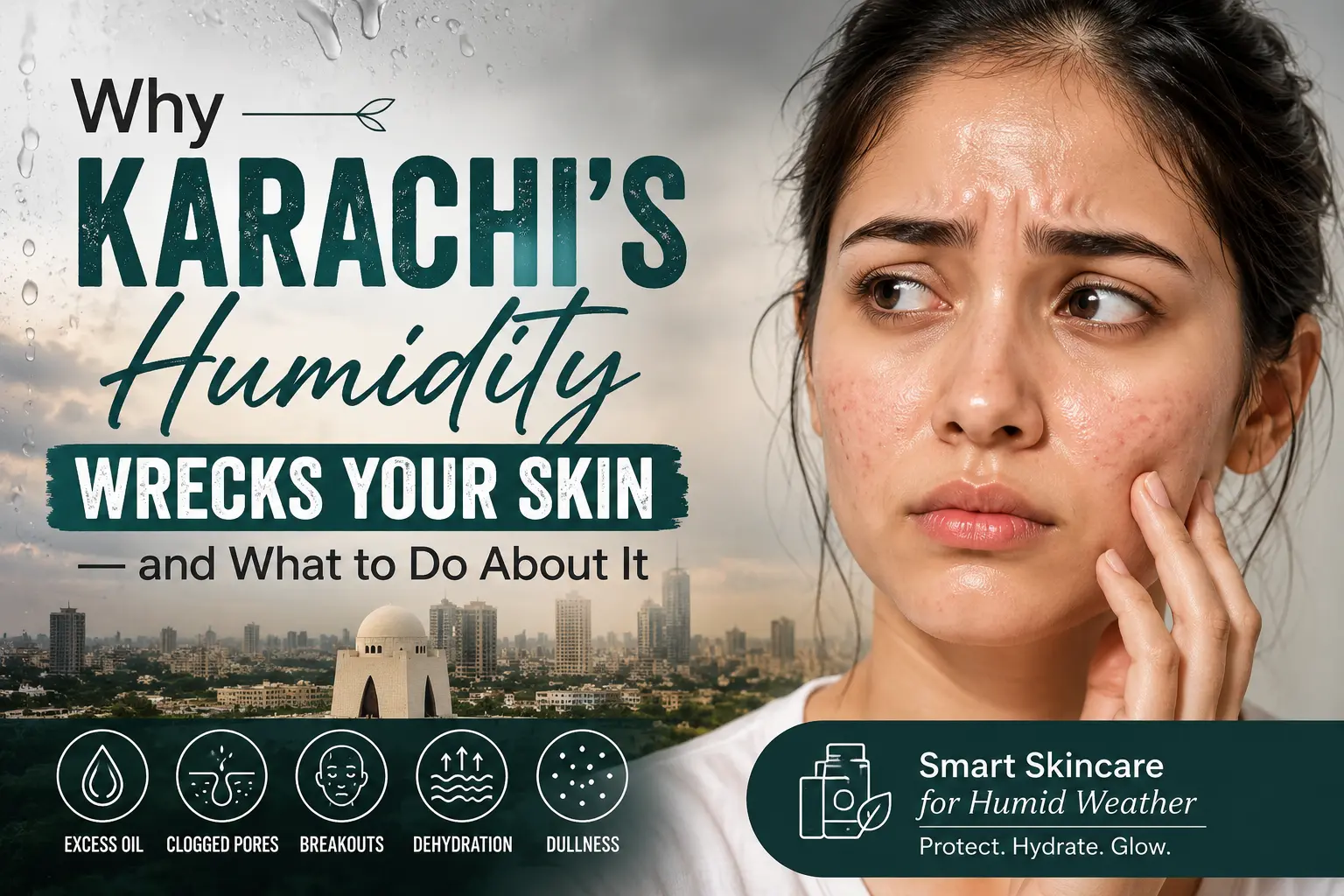
Step outside in Karachi on any given afternoon and you will feel it immediately: that thick, sticky air that clings to your skin within minutes of leaving an air-conditioned room. By the time you get home, your face feels oily, your makeup has shifted, and somehow your skin feels both greasy and dehydrated at the same time.
If this sounds familiar, you have already experienced exactly why Karachi’s humidity wrecks your skin. Karachi’s coastal location means it deals with consistently high humidity levels for most of the year, and this constant moisture in the air, combined with heat, pollution, and sweat, creates one of the most challenging climates for skin health anywhere in Pakistan.
In this guide, we break down exactly what is happening to your skin in Karachi’s humid climate, the warning signs most people miss, and a practical, expert-backed routine to help your skin stay balanced, clear, and healthy all year round.
Quick Answer
| Why Karachi’s Humidity Wrecks Your Skin Karachi’s humidity wrecks your skin by triggering excess oil production, trapping sweat and pollution against the skin’s surface, and creating an ideal environment for acne-causing bacteria. Combined with intense heat and UV exposure, this leads to clogged pores, breakouts, dullness, and an imbalanced skin barrier over time. |
What Makes Karachi’s Humidity So Harsh on Skin?
Karachi’s climate is unique even by Pakistani standards. As a coastal city, it experiences high humidity levels for most of the year, frequently combined with intense heat, especially between April and September. This specific combination is what makes Karachi’s humidity wrecks your skin in ways that drier cities simply do not experience.
High humidity levels: When moisture in the air is consistently high, your skin’s sebaceous glands respond by producing more oil, since the skin senses less need to retain its own moisture from internal reserves.
Excess sweating: Karachi’s heat means your body sweats more throughout the day, and this sweat mixes with sebum on the skin’s surface, creating a film that traps dirt and bacteria.
Oil production: Increased sebum output, especially in the T-zone, leads to a shinier complexion and a higher likelihood of clogged pores.
Pollution impact: Karachi’s traffic and industrial activity add fine particulate matter to the air, which settles on oily, sweaty skin far more easily than on dry skin.
Heat and UV exposure: Year-round sun exposure accelerates pigmentation and breaks down collagen, compounding the damage already caused by oil and pollution buildup.
Together, these factors create a cycle: oil attracts pollution, pollution clogs pores, clogged pores trigger breakouts, and breakouts trigger more oil production. This is the core reason karachi weather skincare needs a fundamentally different approach than routines designed for drier climates.
Signs Your Skin Is Suffering From Humidity Damage
Many people in Karachi normalize these symptoms without realizing they are direct signs of humidity skin problems. Here is what to watch for.
- Frequent acne breakouts, especially along the forehead, nose, and chin.
- Visibly clogged pores or blackheads that seem to reappear within days of extraction.
- Excess oil and shine, even just an hour or two after cleansing your face.
- A dull, tired-looking complexion despite regular cleansing.
- Dehydrated skin that paradoxically still feels oily to the touch.
- Uneven skin tone, dark spots, or patches of pigmentation that seem to be getting worse.
If two or more of these sound familiar, your current routine likely is not built for Karachi’s specific climate demands, and it is time for an adjustment.
| Find hydrating skincare products before symptoms worsen. Explore our hydrating skincare collection → |
Why Karachi’s Humidity Wrecks Your Skin More Than You Think
The reasons behind this go deeper than just ‘it’s hot and sticky.’ Here is the science, explained simply.
Skin Barrier Damage
Your skin barrier is the outermost layer that protects against irritants, locks in hydration, and keeps bacteria out. In Karachi’s humid air, sweat and oil sit on the skin’s surface for longer periods, especially under makeup or sunscreen, which can disrupt the skin’s natural balance and weaken this barrier over time.
Transepidermal Water Loss
Transepidermal water loss, often shortened to TEWL, refers to how much moisture evaporates from your skin into the surrounding air. Interestingly, very high humidity can actually slow this evaporation, since the air is already saturated with moisture. However, this does not mean your skin is well hydrated. Instead, the skin can feel oily on the surface while remaining dehydrated underneath, because surface oil is not the same as deep, internal hydration.
Bacterial Growth
Warmth and moisture are the two ingredients bacteria need most to multiply. When sweat, oil, and humidity combine on the skin’s surface, acne-causing bacteria thrive, which is a major reason breakouts often worsen noticeably during Karachi’s peak humidity months.
Inflammation
Constant exposure to heat, sweat, and pollution can trigger low-grade inflammation in the skin, showing up as redness, sensitivity, or breakouts that take longer than usual to heal.
Oxidative Stress
Pollution particles in humid air generate free radicals on contact with the skin, accelerating the breakdown of collagen and contributing to premature fine lines, dullness, and uneven texture over time.
Best Skincare Routine for Humid Weather
A well-structured humid climate skincare routine focuses on controlling oil without over-drying the skin, since stripping your skin too aggressively only triggers more oil production in response.
Morning Routine
- Step 1: Cleanse with a gentle, oil-balancing face wash to remove overnight buildup without stripping the skin.
- Step 2: Apply a lightweight hydrating serum to support the skin barrier before oil production increases throughout the day.
- Step 3: Use an oil-free, non-comedogenic moisturizer to lock in hydration without adding extra shine.
- Step 4: Finish with a broad-spectrum SPF 30 or higher to protect against Karachi’s intense year-round UV exposure.
Evening Routine
- Step 1: Double cleanse to remove sunscreen, sweat, and pollution buildup from the day.
- Step 2: Apply a treatment serum targeted to your main concern, whether that is acne, dullness, or uneven tone.
- Step 3: Moisturize with a slightly richer formula to support overnight skin barrier repair.
Weekly Routine
- 1 to 2 times: Use a gentle exfoliating treatment to clear away dead skin cells and reduce clogged pores.
- 1 time: Apply a clarifying or hydrating mask depending on whether your skin is leaning oilier or more dehydrated that week.
| Ready to upgrade your skincare routine for Karachi’s climate? Browse our daily skincare essentials today → |
Ingredients That Protect Skin in Humid Climates
Not every ingredient suited to dry climates works well in humidity. Here are the ones backed by skincare experts specifically for hot, humid conditions like Karachi’s.
Hyaluronic Acid: A lightweight humectant that hydrates without adding heaviness, ideal for humid weather when richer creams can feel suffocating.
Niacinamide: Helps regulate oil production, minimize the appearance of pores, and calm inflammation, making it one of the most versatile ingredients for humid-climate skin.
Vitamin C: A powerful antioxidant that helps counter oxidative stress from pollution while also brightening dullness and fading pigmentation.
Ceramides: Support and strengthen the skin barrier, helping it resist the daily wear of sweat, oil, and environmental exposure.
Salicylic Acid: A beta hydroxy acid that penetrates oily skin to clear clogged pores, making it especially useful for acne prevention skincare in humid weather.
Zinc: Offers gentle oil control and has calming, anti-inflammatory properties that help reduce redness and irritation from frequent breakouts.
Comparison: Skincare Ingredients for Humid Weather
| Ingredient | Primary Benefit | Best For | How Often to Use |
| Hyaluronic Acid | Lightweight hydration | Dehydrated, oily-on-surface skin | Daily, morning and night |
| Niacinamide | Oil control, pore minimizing | Oily, combination, acne-prone | Daily, once or twice |
| Vitamin C | Antioxidant, brightening | Dull, pollution-exposed skin | Mornings, before SPF |
| Ceramides | Barrier repair | Sensitive, barrier-compromised skin | Daily, especially at night |
| Salicylic Acid | Pore clearing, acne control | Oily, acne-prone skin | 2 to 4 times weekly |
| Zinc | Oil control, calming | Inflamed, breakout-prone skin | Daily, as part of treatment |
Recommended Products From Hi-Lift Skincare
Karachi’s climate calls for products that hydrate without weighing the skin down, and control oil without stripping it. Hi-Lift Skincare’s formulas are built around exactly this balance.
Our Niacinamide and Hyaluronic Acid serums work well together as part of a humid-weather routine, hydrating the skin while helping regulate excess oil and visibly minimizing pores.
If breakouts are your main concern, our BHA-based acne-fighting skincare solutions help clear clogged pores without over-drying the surrounding skin, a common mistake with harsher acne treatments.
For barrier support, our Radiance Cream offers lightweight, fast-absorbing hydration that helps restore comfort to skin worn down by daily heat and humidity exposure.
To gently exfoliate and brighten without irritating oily, humidity-stressed skin, our Brightening Scrub and complete facial kit range remove dead skin buildup while supporting a clearer, more even complexion.
Every Hi-Lift formula is cruelty-free, sulfate-free, and free from SLS, silicone, and alcohol, which matters even more in a climate where skin is already under constant environmental stress.
| Shop authentic skincare products from Hi-Lift Skincare and enjoy trusted solutions built for Pakistan’s toughest climates → |
Common Skincare Mistakes People Make During Karachi’s Humid Season
Skipping moisturizer because skin already feels oily: This often backfires, triggering even more oil production as the skin tries to compensate for lost hydration.
Over-washing the face: Washing more than twice daily strips the skin’s natural barrier and worsens both oiliness and sensitivity over time.
Using heavy, occlusive creams: Thick, rich formulas designed for dry climates can trap sweat and oil underneath, increasing breakouts in Karachi’s humidity.
Skipping sunscreen on cloudy or humid days: UV exposure remains high year-round in Karachi regardless of visible cloud cover.
Touching the face throughout the day: Hands carry oil, bacteria, and pollution that transfer directly onto already humidity-stressed skin.
Not reapplying sunscreen: Sweat breaks down SPF protection faster in humid weather, making midday reapplication essential, not optional.
Expert Tips to Keep Skin Healthy All Year
- Switch to a lighter, gel-based moisturizer during Karachi’s peak humidity months, and a slightly richer formula during the milder winter weeks.
- Carry blotting papers or a gentle facial mist to manage midday shine without disrupting your skincare layers.
- Stay consistently hydrated by drinking enough water daily, since internal hydration supports your skin barrier from within.
- Clean your phone screen and pillowcases regularly, as both collect oil and bacteria that transfer back onto the skin.
- Be patient with new products. Most active ingredients take four to six weeks of consistent use to show visible skin barrier protection and clarity improvements.
- Avoid switching products too frequently. Constant changes make it difficult to know what is actually working for your skin.
Frequently Asked Questions
| Q: Why does Karachi’s humidity cause more acne breakouts? A: Karachi’s humidity increases sweat and oil production, which combine with pollution to clog pores and feed acne-causing bacteria. |
| Q: Should I skip moisturizer if my skin feels oily in humid weather? A: No, skipping moisturizer often triggers even more oil production as your skin tries to compensate for lost hydration. |
| Q: What is the best moisturizer for humid weather in Karachi? A: A lightweight, oil-free, non-comedogenic gel moisturizer works best for Karachi’s humid climate. |
| Q: How often should I exfoliate in Karachi’s humid climate? A: Most people benefit from gentle exfoliation one to two times per week during Karachi’s humid season. |
| Q: Does humidity make skin age faster? A: Yes, prolonged exposure to humidity combined with heat, UV rays, and pollution can accelerate collagen breakdown and premature aging. |
Healthier Skin Starts With the Right Routine
Why Karachi’s humidity wrecks your skin ultimately comes down to one cycle: excess oil, trapped sweat, pollution buildup, and a weakened skin barrier all feeding into each other. The good news is that this cycle can be interrupted with the right combination of gentle cleansing, lightweight hydration, targeted active ingredients, and daily sun protection.
You do not need to fight Karachi’s climate with trial and error. A consistent, climate-appropriate routine, paired with the right products, can keep your skin clear, balanced, and genuinely healthy all year round, even through the city’s most humid months.
Hi-Lift Skincare formulates every product with Pakistan’s toughest climates in mind, from Karachi’s humidity to Islamabad’s dry winters, so you can build a routine that actually works for where you live.
| Order now and experience skincare designed for healthier, brighter, and more balanced skin Shop Hi-Lift Skincare today → |